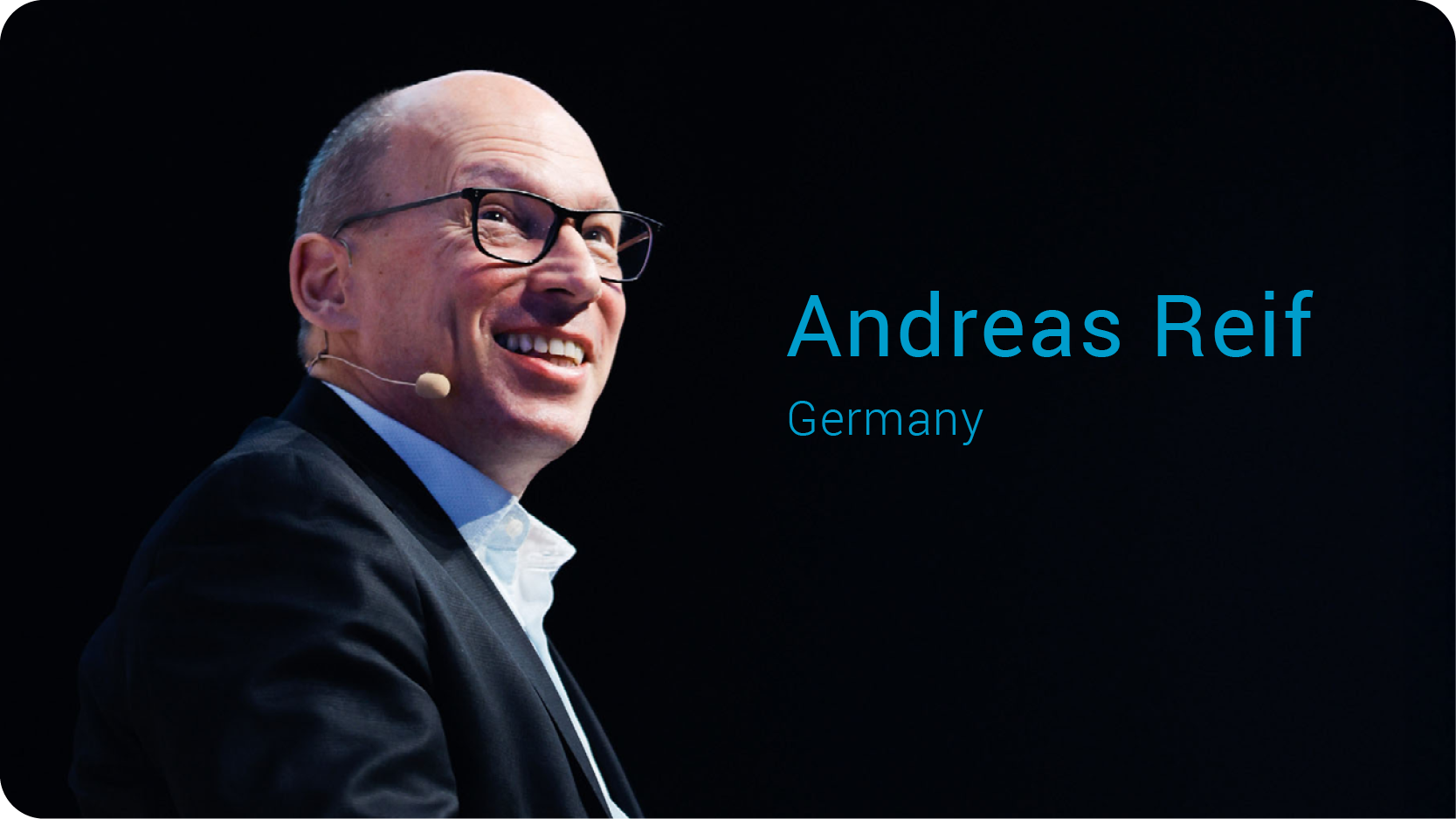
How the ECNP Congress programme is built: a look behind the scenes
It’s that time of the year again: our annual ECNP Congress is just around the corner, and the ECNP Office, the Executive Committee and many others are busy with the final preparations.
This year, we are heading to Munich—right after the Oktoberfest, so don’t worry: hotel prices should be back to normal, and the city should be largely free of beer-drinking tourists. The meeting will combine the unique flair of Bavaria with the latest and most impactful science, all with our shared goal of improving the lives of people living with mental disorders.
As always, our Scientific Programme Committee has done a superb job of scouting for the best speakers and the most exciting science out there. I am particularly looking forward to our Keynote Speaker, Kay Tye, who will talk about social homeostasis—a fascinating research field that I am sure will appeal to a very broad audience. Other plenaries that are bound to attract a lot of attention include Oliver Howes’s Award Lecture, Julia Sacher’s lecture on the interplay between hormones and the female brain, Lukole Atoye’s perspective on mental health in a rapidly changing world, Lucia Valmaggia’s talk on the role of VR in youth mental health, Ian Maze’s lecture on protein monoaminylation, and Frank Winkler’s Brain Prize Lecture on malignant networks. These, like the symposia, promise to be really exciting!
And there is so much more: scientific symposia, thousands of posters, educational and career-development sessions, and, of course, our much-loved and usually fully booked Campfire sessions – not to mention the industrial sessions.
With the Congress approaching, I thought I would give you a little insight into how our Scientific Programme Committee (SPC) works. Having served as Chair of the SPC for three years, I can offer a glimpse behind the scenes—or, perhaps, into the “engine room” of ECNP. It may be of particular interest because our SPC works quite differently from those of many other scientific meetings.
At many learned societies, the Executive Committee plays a central role in composing the programme of the annual conference, supported by a larger or smaller — and more or less active—group of colleagues who primarily score symposium proposals, which are then ranked and selected. This is not how it works at ECNP. Our SPC operates completely independently of the Executive Committee.
The process starts with the SPC Chair putting together a group of around 12-15 peers. Great care is taken to achieve a good balance in terms of gender, country, research setting and other relevant dimensions, ensuring that the committee is broad and diverse. Equally important is how well connected SPC members are within the field and how deeply they understand current developments in research.
Once the SPC has been formed, it meets in person for a full day at Schiphol Airport—not exactly the most beautiful venue, but certainly a very practical one!—where the committee discusses and ranks the symposia and educational session proposals. And then twice more virtually to adjust, refine, and polish.
As you know, ECNP does not require symposium proposers to contact speakers before submitting their proposals. This is quite different from many other meetings, and there is a simple reason for it: the ECNP SPC does not merely approve or reject proposals. It takes a much more active role, including replacing speakers, merging similar proposals, and making all sorts of other changes to the original concept.
After the initial ranking has been completed by the entire PC—an offline task carried out before the first meeting—we have our first list of symposia, ranked according to their average scores. There is usually a group of proposals that are clearly “in”, but there is a much larger group which the committee feels would benefit from some adjustment. And that is where the real discussion begins.
Novelty of topics, repetition, and the balance between preclinical, translational and clinical sessions are all discussed intensively. The composition of the individual sessions is scrutinised as well. Gender balance—which must be equal—and country balance—four countries per symposium—are important criteria. And then there is our strict rule on repeat speakers: if you have spoken in an ECNP plenary, symposia, or educational update within the previous three years, you are out.
This may sound harsh, but it serves an important purpose: avoiding the same people appearing again and again, while giving fresh voices, new data and emerging researchers the opportunity to contribute. The process of discussing, reshaping and sometimes completely re-engineering the proposals is intense and demanding—but also incredibly stimulating. After all, where else do you get the opportunity to spend so much time discussing some of the best translational neuroscience in the world? I always enjoyed these days tremendously. It also means that the final symposium programme can look quite different from the original submissions. In other words: whatever you submit, quite a lot can happen to it!
And there is another well-known secret: every year, there is a “doomed symposium”—the one that takes ages to find all its speakers, has to cope with cancellations, and encounters every conceivable problem along the way. Which symposium that is, however, remains strictly confidential. What happens in the SPC stays in the SPC!
Symposia and educational sessions are only part of the SPC’s work. Considerable effort goes into selecting the keynote and plenary speakers—and this is where the real fun begins. We all have our personal wish lists of people we would love to see at an ECNP meeting, and here is our opportunity to make some of those wishes come true. The “special formats”, such as the Campfires, also require creativity and thinking outside the box. For me, this was always one of the most entertaining parts of the SPC discussions.
Once the programme is considered final by the SPC, it is sent to the Executive Committee for final approval. This is usually granted with no, or only very minor, changes. Keeping the SPC separate from the EC is, in my view, a real advantage: it allows the programme to remain flexible, dynamic and continuously evolving.
Continuity is therefore ensured through the Chair of the SPC. The Chair initially serves one regular term as an SPC member, is then selected as incoming Chair for another term, and subsequently serves as Chair for three years. Finally, the outgoing Chair stays on for one additional year to support the new Chair. Altogether, this means six years of involvement in the leadership of the SPC.
Being SPC Chair is a lot of work—from scoring proposals and preparing meetings to answering hundreds of emails, many of them arriving at the last minute. But it is also one of the most exciting and rewarding positions one can have in science, not least because of the outstanding support provided by the Scientific Advisory Panel, the Abstract and Poster Committee, and the ECNP Office.
Given the enormous workload involved, I would therefore like to applaud and sincerely thank our current SPC Chair, Barbara Franke, NL, and the entire Scientific Programme Committee for putting together what promises to be such a thrilling meeting.
Come to Munich—and I am sure you will agree with me! See you there!